Why Reading Comprehension Is the Foundation of Academic Success

Ask any group of educators to identify the single most predictive skill for long-term academic achievement, and reading comprehension will rank near the top of every list. It is not an isolated language arts skill — it is the cognitive foundation that underpins success in every subject that requires students to extract, interpret, and apply information from text. A student who reads with poor comprehension will struggle in science, social studies, and math — not just in English class.
Comprehension Is the Bridge Between Decoding and Understanding
The benefits of reading comprehension skills extend far beyond the ability to answer questions about a passage. True reading comprehension involves making inferences from incomplete information, identifying main ideas and supporting details, recognizing the structure and purpose of different types of texts, and connecting new information to prior knowledge. These are not simple skills — they are sophisticated cognitive processes that require deliberate development.
Many students can decode text fluently — they can read the words accurately and quickly — but struggle significantly with comprehension. This gap between decoding ability and understanding is one of the most common and underrecognized challenges in elementary and middle school education. It requires targeted instruction that goes well beyond general reading practice.
See also: Why Technical Students Seek Expert Paper Writing Help for Research Projects
The Cross-Subject Impact of Weak Comprehension
A student with weak reading comprehension will have difficulty understanding written math problems, even if their arithmetic is strong. They will struggle to extract the relevant information from science textbook chapters, even if they are genuinely curious about the subject. They will have difficulty interpreting historical documents, political speeches, and analytical texts in social studies.
This cross-subject impact means that addressing reading comprehension has an unusually high return on investment. Improving this single skill simultaneously improves a student’s ability to learn in every subject that involves written content — which is essentially all of them. Families and schools that prioritize comprehension development are not just improving reading scores; they are improving academic performance across the board.
Strategies That Actually Build Comprehension
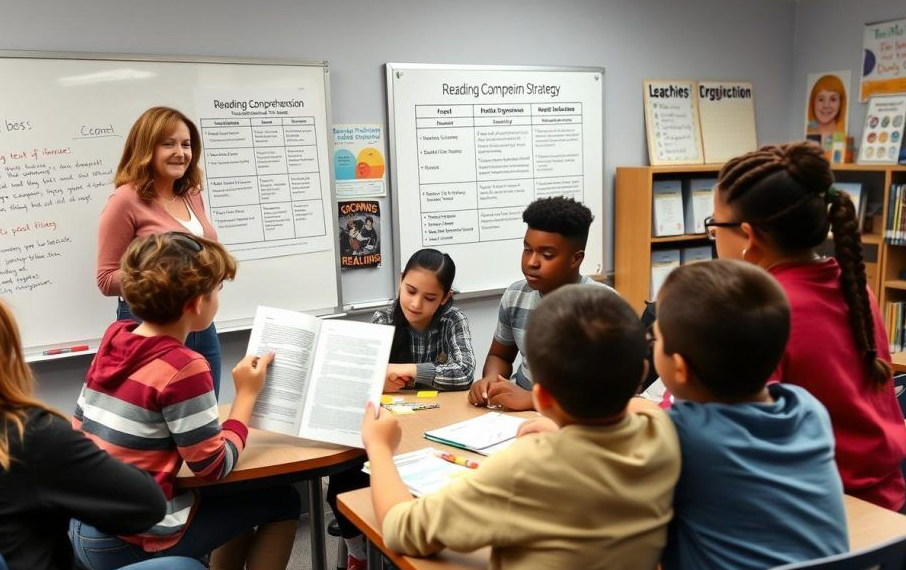
Not all reading practice builds comprehension. Simply reading large volumes of text without specific comprehension instruction produces limited improvement. What builds comprehension is strategy instruction — teaching students to ask questions before, during, and after reading, to visualize what they are reading, to monitor their own understanding and identify when it breaks down, and to use context clues and inference to fill in gaps.
These strategies are teachable, and students who acquire them show measurable gains in comprehension ability relatively quickly. The key is consistent, targeted practice with increasingly complex texts, guided by an instructor who can provide feedback on whether the student’s comprehension strategies are being applied effectively and accurately.
Investing in Comprehension Is Investing in the Future
Strong reading comprehension is not just an academic asset — it is a life skill. Adults who comprehend written information well are better positioned in almost every professional context. They can learn from written materials efficiently, interpret complex instructions accurately, and engage with information at a sophisticated level. Building this skill in childhood is one of the most meaningful investments in a child’s long-term capabilities that a parent can make.