Custom Wool Socks for Cold-Weather Staff: What Buyers Should Check First

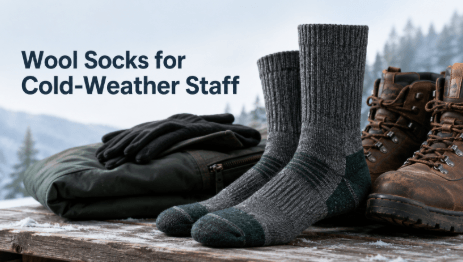
Cold-weather staff gear needs to be practical. A sock that looks good in a mockup but feels thin, itchy, or too tight will not be used often. For companies, outdoor teams, event crews, campus staff, and winter programs, socks should be chosen based on warmth, comfort, fit, and long-wear durability.
Wool socks can be a strong option, but not every wool sock works the same way. The fiber blend, thickness, cushioning, and logo method all affect the final product.
Start With the Work Environment
The first question is where the socks will be worn. Staff working indoors may only need soft, midweight socks. Outdoor workers, winter event crews, ski staff, and cold-weather volunteers may need thicker socks with better insulation.
A light wool-blend sock may weigh around 40–60g per pair, depending on size and construction. A thicker winter crew sock may be closer to 70–100g per pair. If the sock includes extra cushioning in the sole, heel, or toe, the weight and thickness can increase.
The goal is not always to choose the thickest sock. If staff wear fitted shoes or work boots, too much thickness can make the sock uncomfortable.
Choose the Right Wool Blend
Pure wool is not always the best choice for custom socks. Most wool socks use blends because socks need stretch, shape recovery, and durability. Wool can provide warmth and natural comfort, while nylon or polyester improves strength. Spandex helps the sock fit securely.
For staff orders, a wool blend may be more practical than a delicate premium fiber. Buyers should ask how the sock handles washing, whether it keeps shape, and whether the material feels soft enough for long wear.
For teams comparing practical custom options, custom socks with logo should be planned around material, sock height, logo placement, and the actual work environment.
Alpaca and Merino Are Not the Same
Alpaca and merino wool are both used for warm socks, but they feel different. Alpaca is often known for warmth and softness, while merino is often valued for comfort, breathability, and moisture control.
For staff use, merino blends may be easier to manage because they can balance warmth and daily wear comfort. Alpaca blends may make sense when the priority is softness and insulation, especially for colder environments.
A detailed alpaca vs merino wool socks comparison can help buyers understand which material direction fits winter staff orders better.
Logo Placement Should Stay Practical
Warm socks often have texture or cushioning, so logo placement should be simple. A calf logo works well on crew socks because it remains visible above many shoes or boots. A small cuff logo can work for subtle branding. Foot logos are less visible and may experience more friction.
For wool-blend socks, buyers should avoid tiny text and overly detailed artwork. Stretch can distort small designs when the sock is worn.
Practical Buying Checklist
Before ordering cold-weather staff socks, check:
- Will staff wear them indoors, outdoors, or in boots?
- Does the sock need light, medium, or heavy cushioning?
- Is the wool blend soft enough for long wear?
- Will the logo stay clear after stretch?
- Are care instructions simple enough for staff use?
See also: Business Class Flights to Bangalore for Business and Leisure Travelers
Conclusion
Custom wool socks can be useful for cold-weather staff, but the material must match the work setting. A warm sock should still fit comfortably, hold shape, and support a clear logo.
For most staff orders, a balanced wool blend is often safer than choosing the warmest material only. Comfort, durability, and care requirements should guide the final decision.